The Complete Guide to AI-Powered Brand Identity
Why Brand Identity Needs AI
Brand identity has traditionally been the domain of expensive consulting firms and months-long engagements. Companies would spend anywhere from $50,000 to $500,000 for a comprehensive brand strategy — and then struggle to keep it consistent across every touchpoint.
AI changes the economics entirely. With structured prompt libraries, a single operator can generate, iterate, and maintain brand identity assets at a fraction of the cost and time. But there is a catch: AI without context produces generic output. The secret is in the system, not the tool.
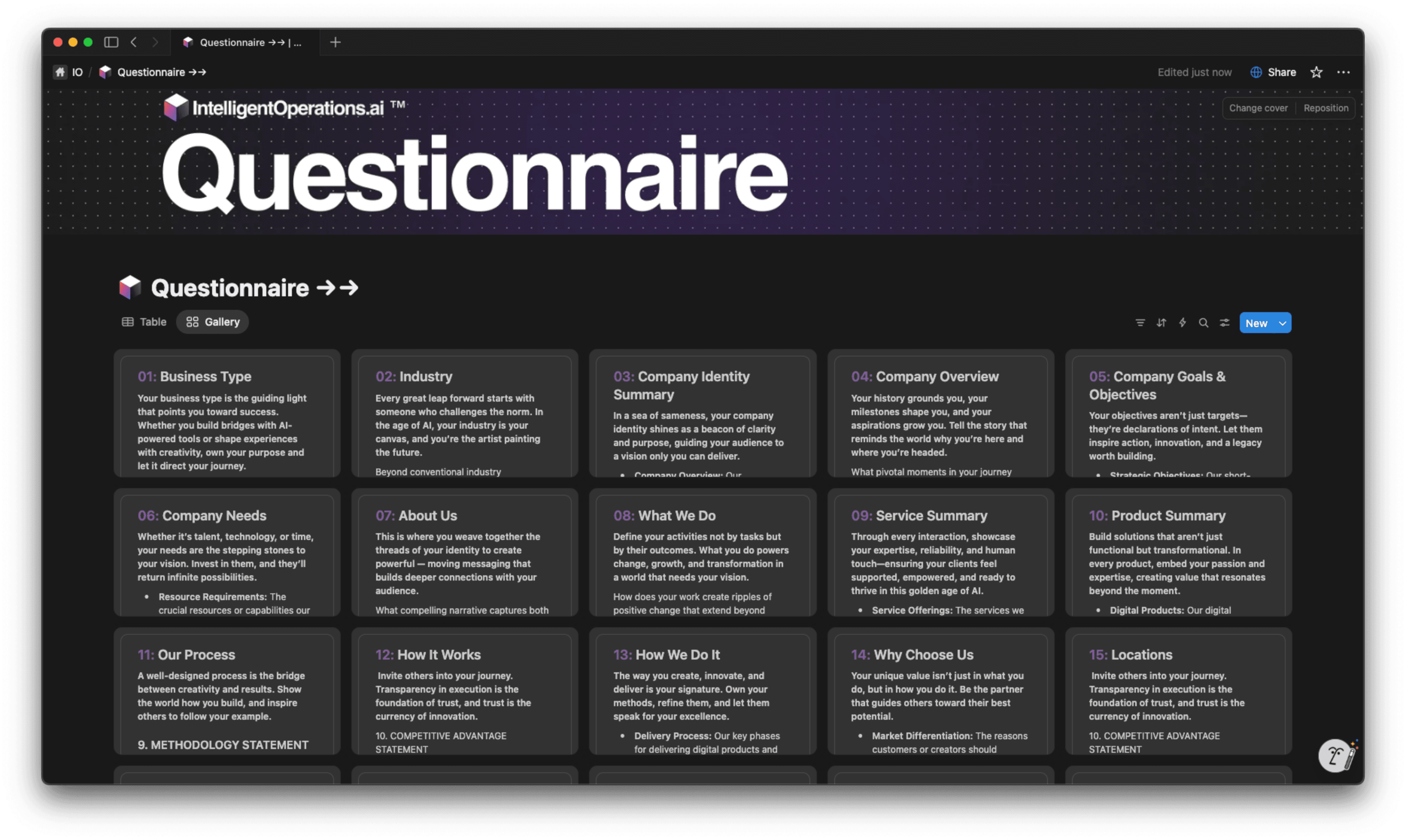
The Context Brief: Your AI's Source of Truth
Every meaningful AI interaction starts with context. A Context Brief is a single, structured document that captures your company's essential identity elements — mission, vision, values, tone, audience segments, competitive positioning, and more.
Think of the Context Brief as the foundation layer. Without it, every prompt you write starts from zero. With it, every prompt inherits deep understanding of who you are, who you serve, and how you communicate. This is the difference between generic AI output and branded, on-strategy content.
The best Context Briefs are living documents. They evolve as your company grows, your market shifts, and your understanding deepens. We structure them in Notion so they can be referenced by any prompt in the system.
“Context is the new competitive advantage. The companies that systematize their knowledge and feed it to AI will outperform those that treat every interaction as a blank page.”
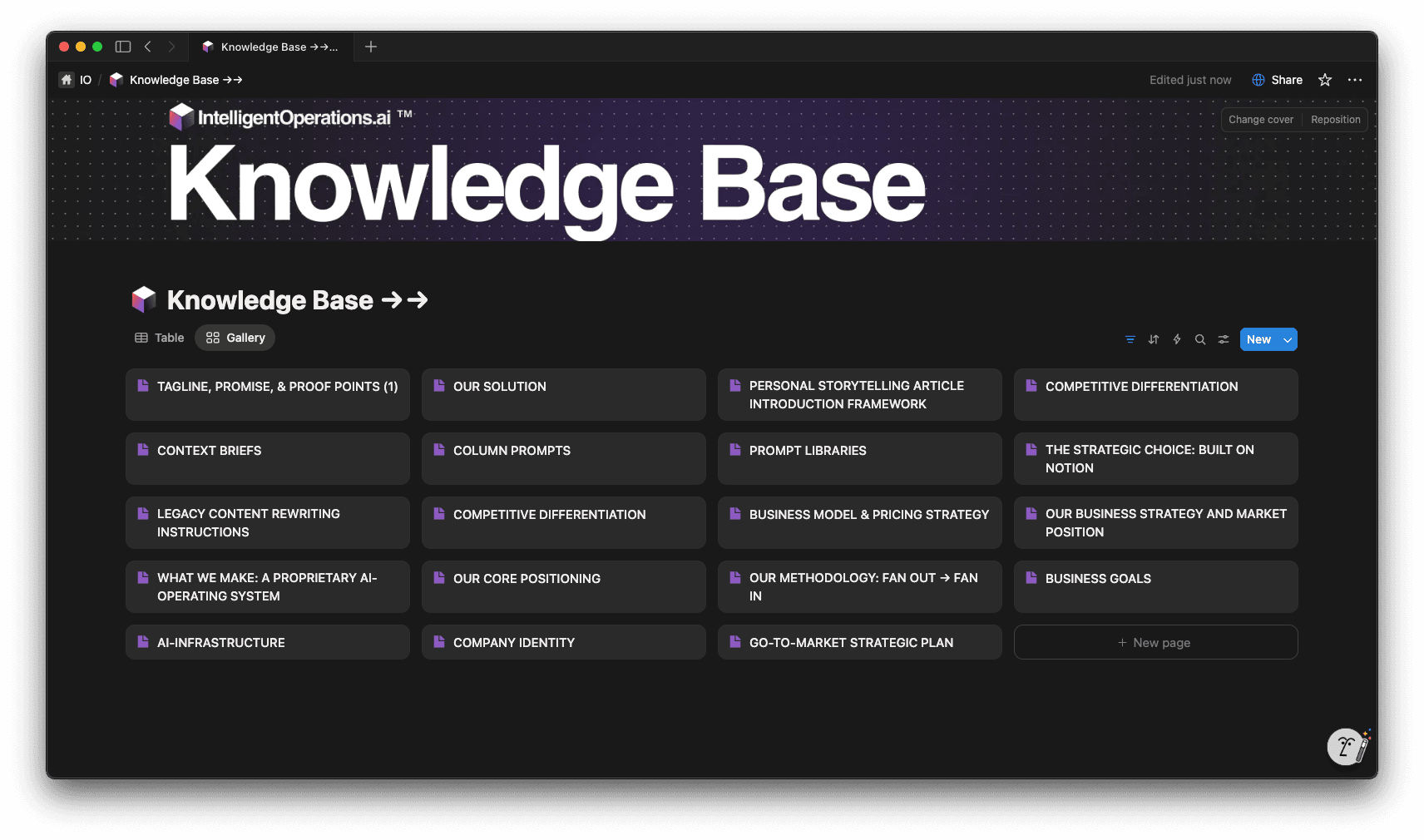
Column Prompts: The Building Blocks
Column prompts are individual, atomic prompts — each designed to generate one specific piece of your brand identity. A mission statement. A set of brand values. An elevator pitch. A competitive positioning statement.
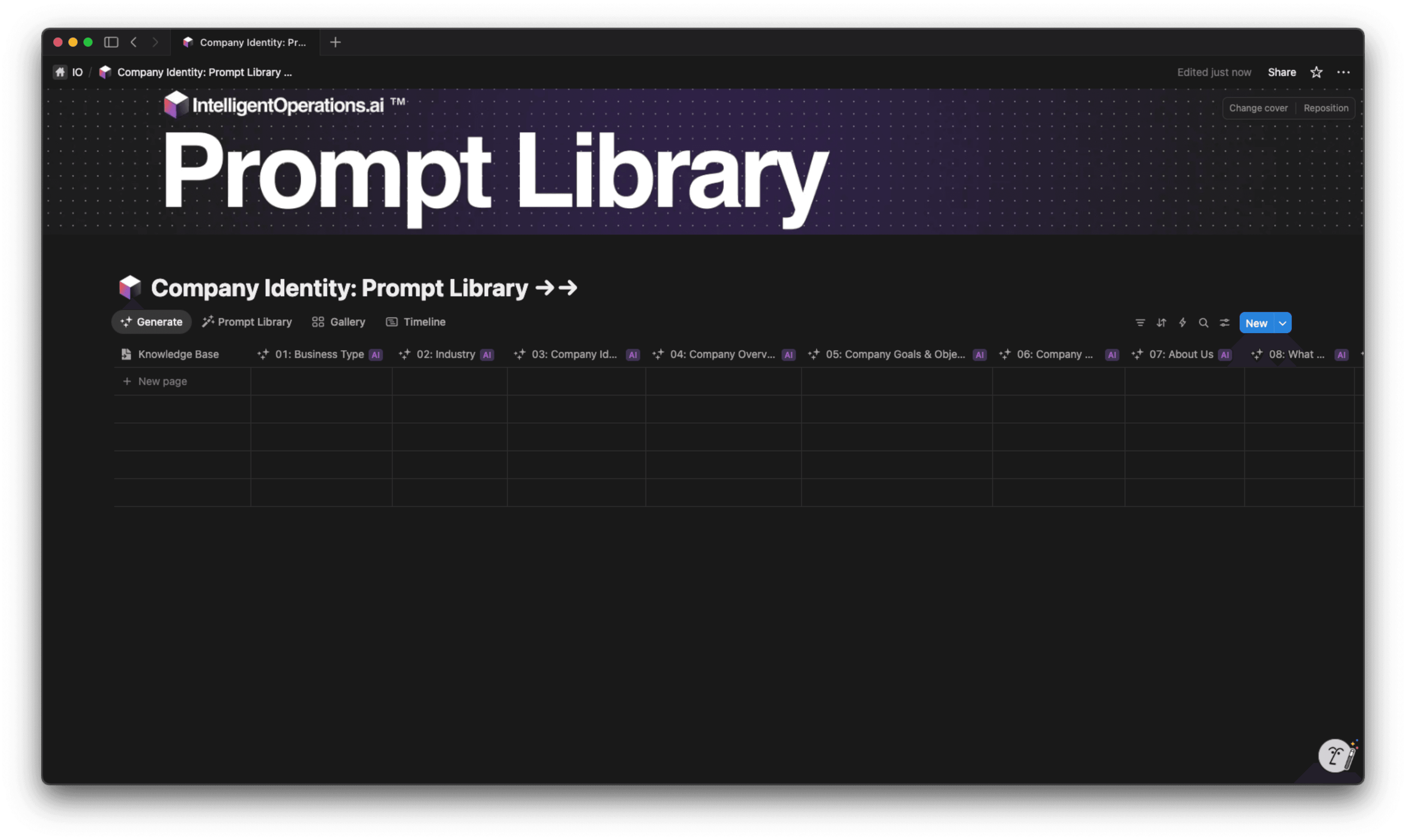
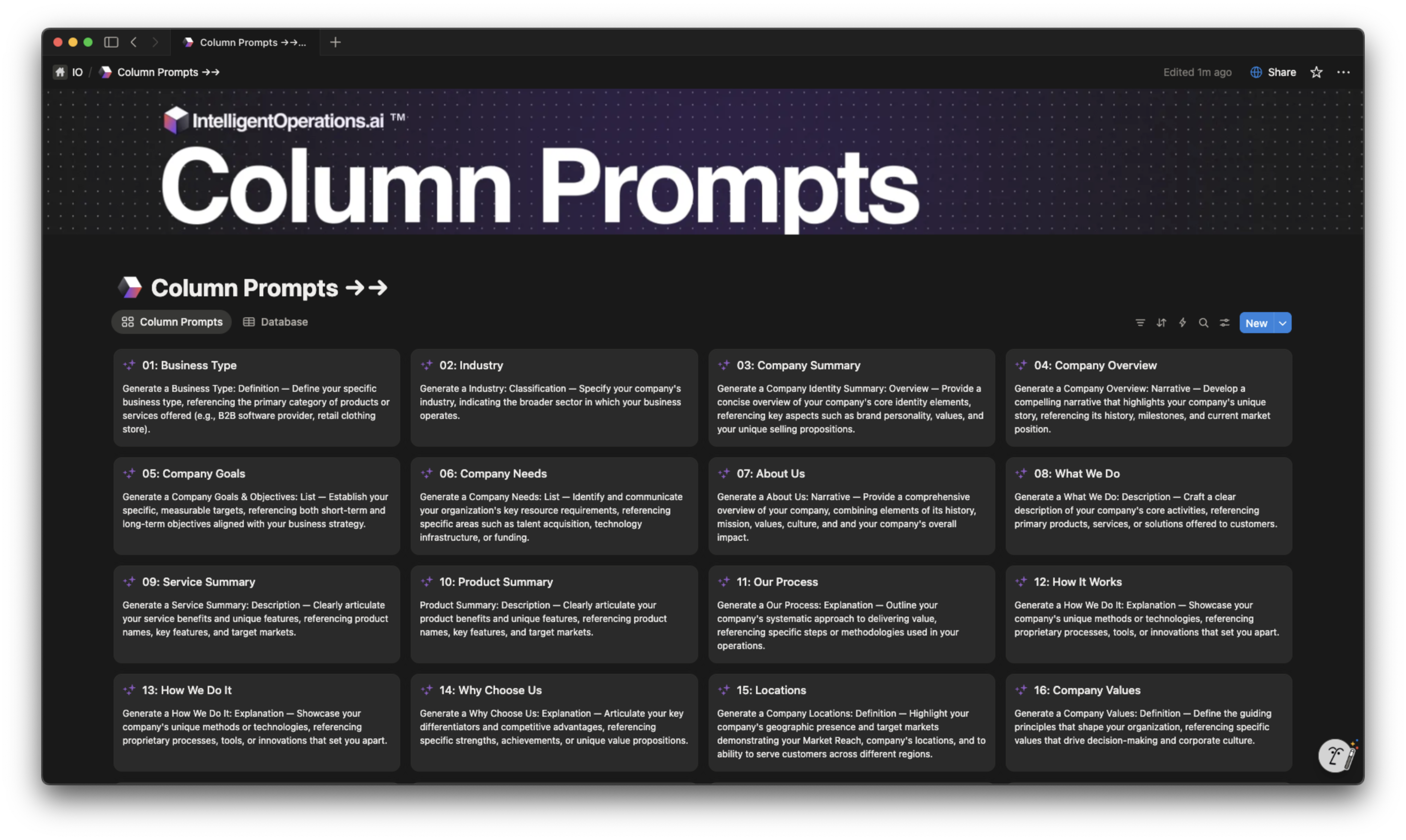
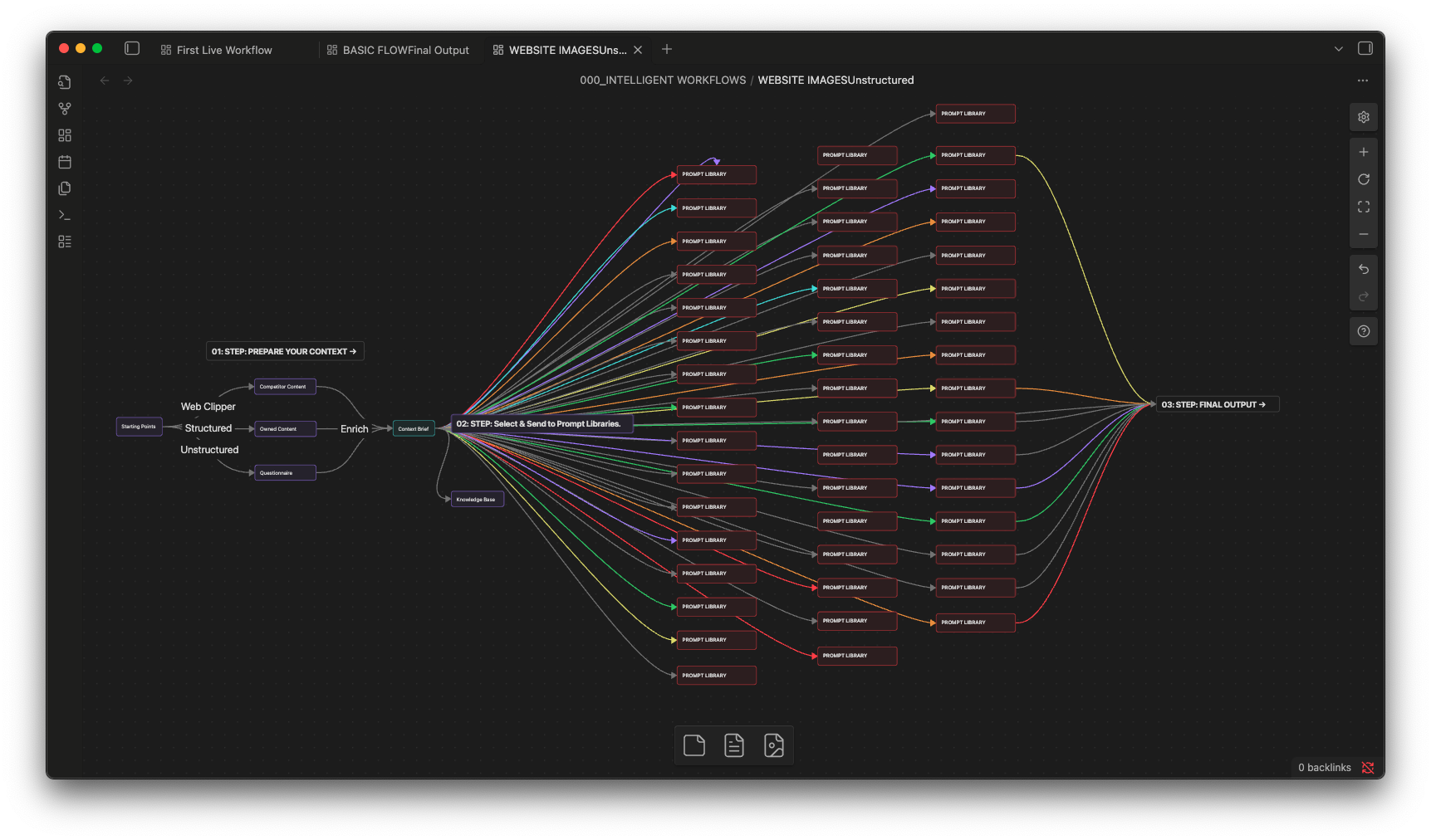
The Company Identity Prompt Library contains 23 column prompts, each carefully engineered to produce high-quality output when fed your Context Brief. They are modular: you can run them individually or fire all 23 simultaneously using the fan-out architecture.
Each column prompt follows a consistent structure: role definition, context injection point, specific instructions, output format, and quality constraints. This structure ensures reliability and consistency across hundreds of generations.
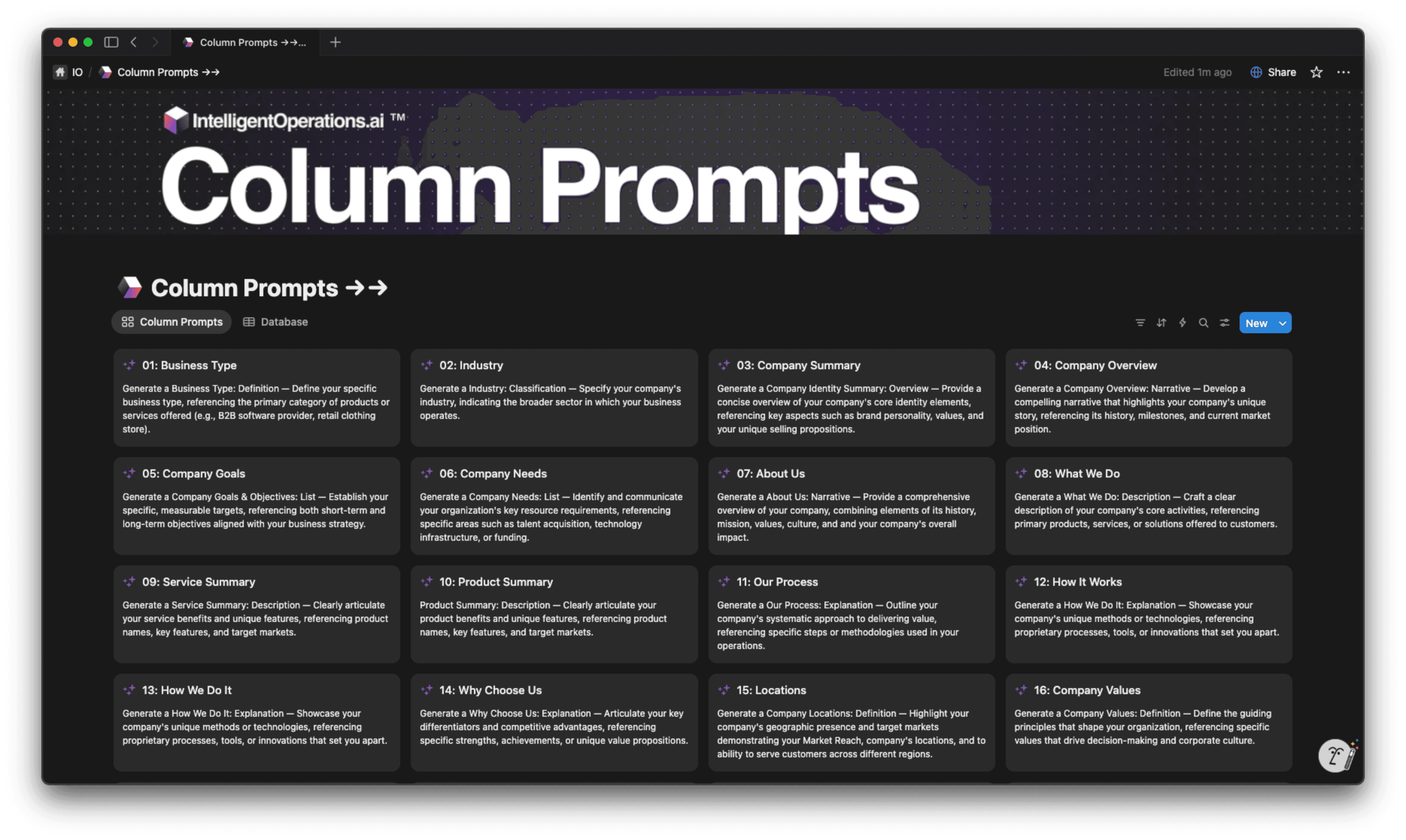
Fan-Out, Fan-In: Parallel Generation
The fan-out, fan-in architecture is where the magic happens. Instead of sequentially generating each identity element, you fire all 23 column prompts simultaneously against your Context Brief. In minutes, you have a comprehensive brand identity system.
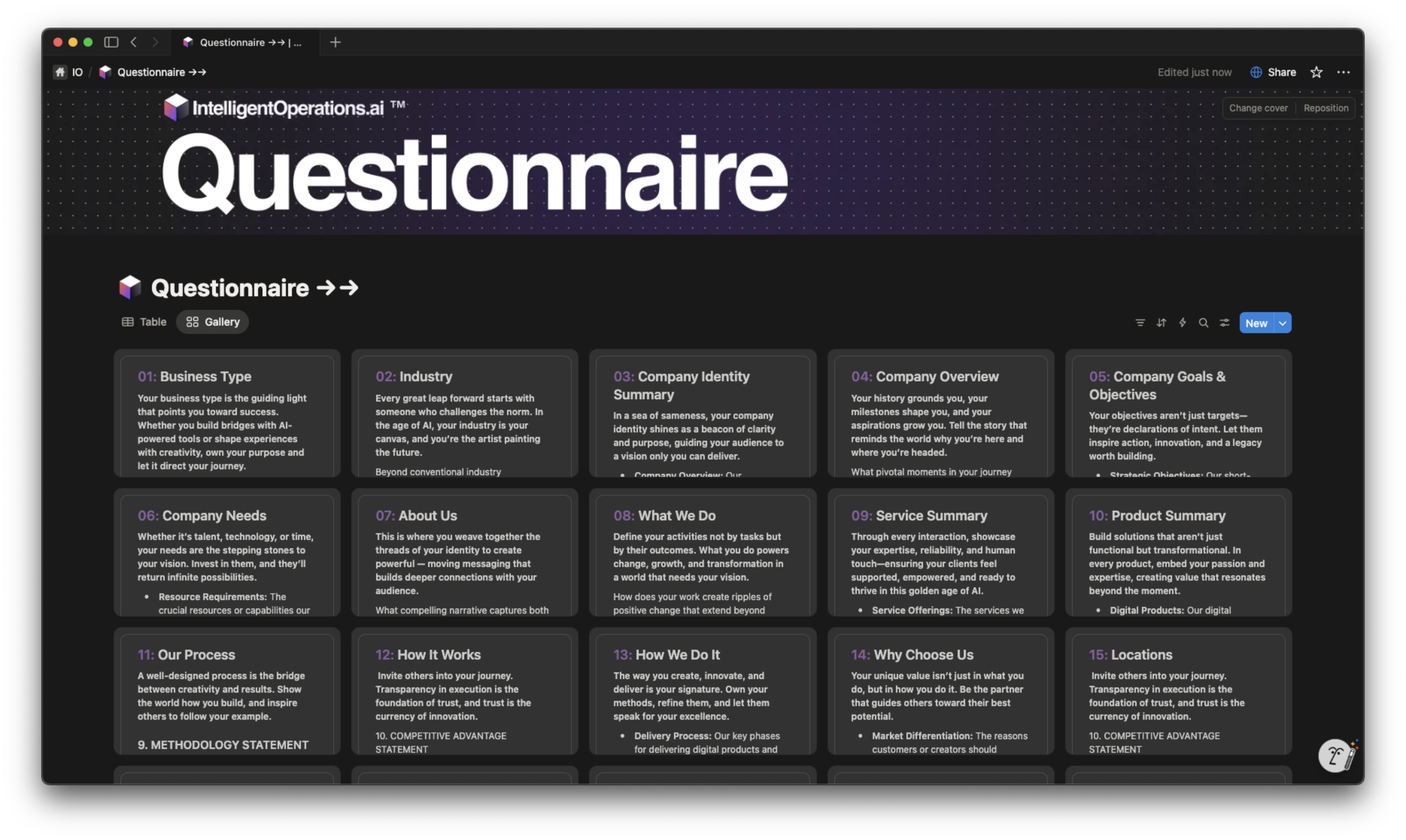
The fan-in step is equally important. Once all outputs are generated, they are collected, reviewed, and synthesized into a cohesive whole. Inconsistencies are flagged, gaps are identified, and the operator can iterate on specific elements without regenerating the entire system.
This architecture mimics how the best consulting firms work — parallel workstreams converging into a unified strategy — but at 100x the speed and a fraction of the cost.
- Fire 23 column prompts simultaneously from a single Context Brief
- Collect, review, and synthesize all outputs in one unified view
- Iterate on individual elements without regenerating the entire system
- Export brand identity assets to any channel or platform instantly
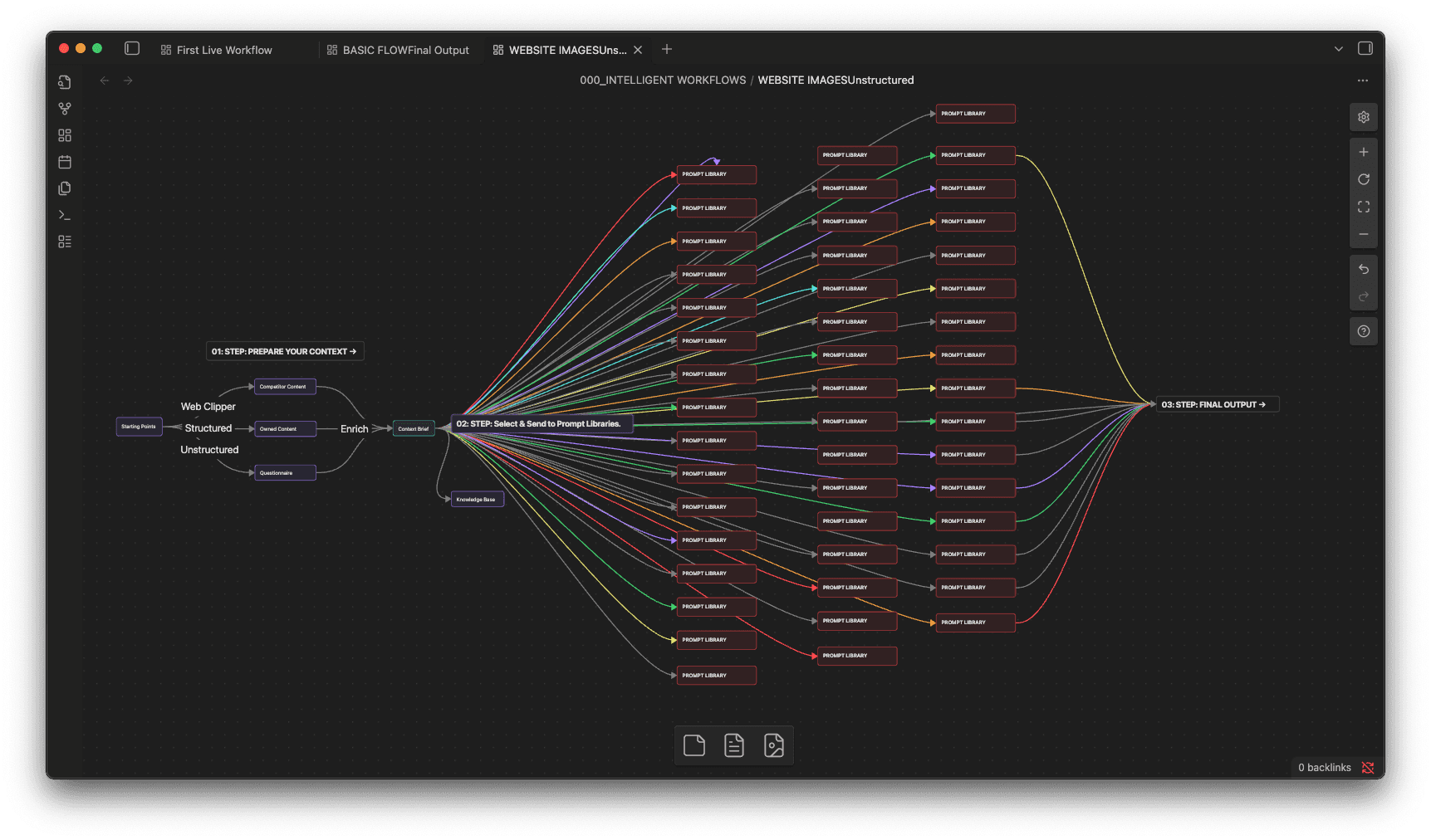
From Prompts to Knowledge Base
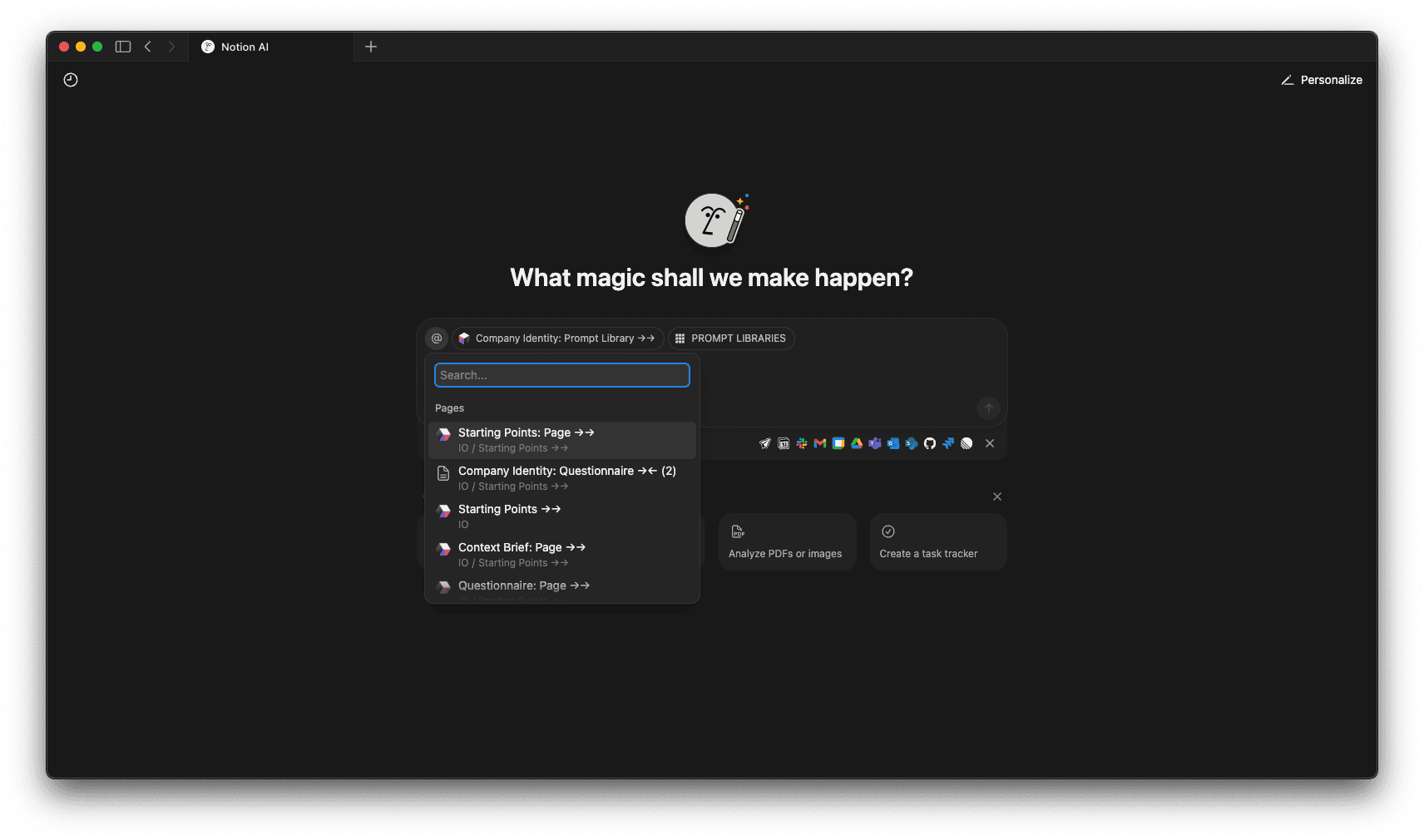
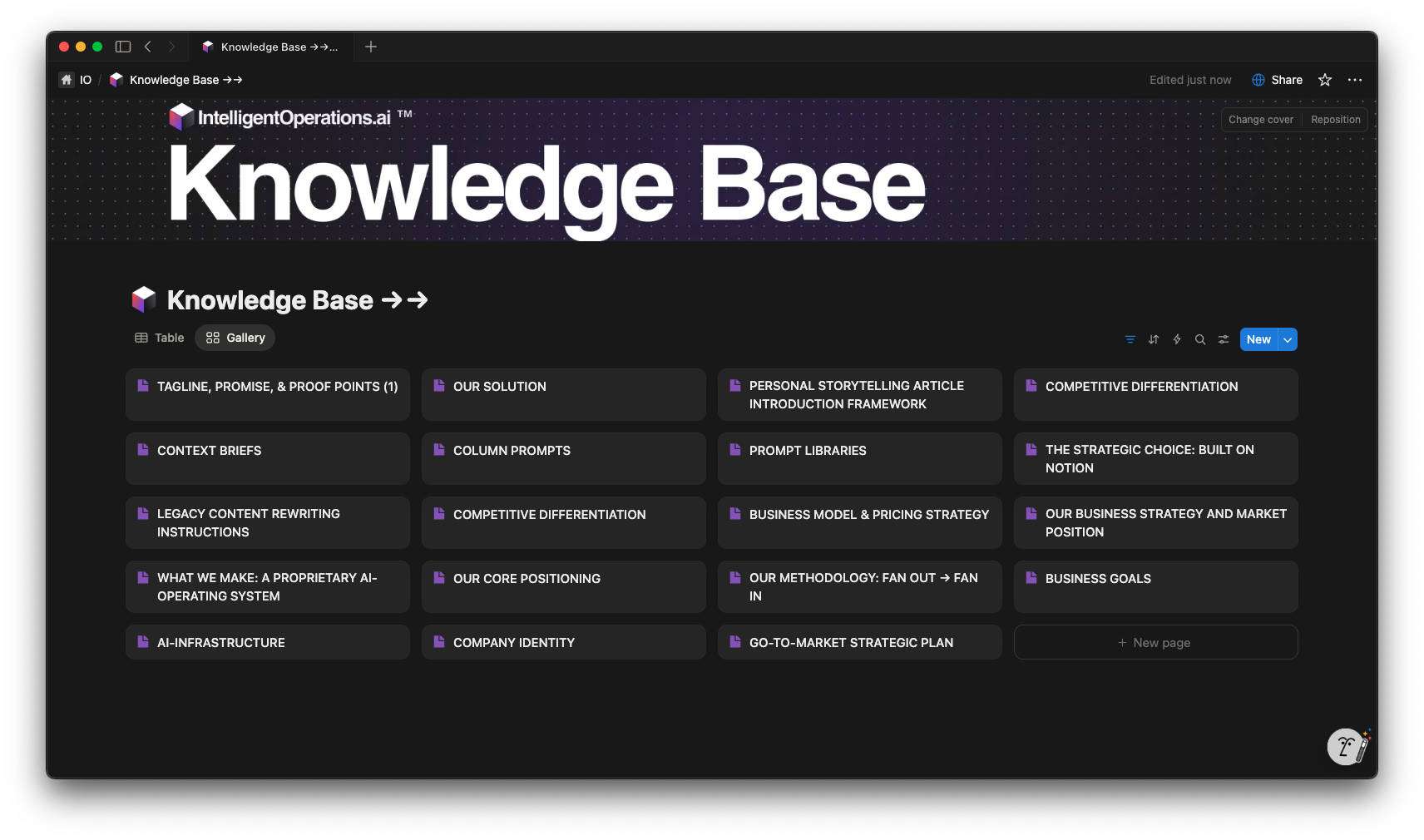
Generated outputs do not live in isolation. They flow into a structured Knowledge Base — a Notion database that becomes your company's AI memory. Every brand element, every positioning statement, every audience insight is stored, tagged, and searchable.
The Knowledge Base serves a dual purpose. First, it is a reference for human operators — a single place to find the latest approved version of any brand asset. Second, it is a context source for future AI interactions. When you generate content, the AI can reference your Knowledge Base to maintain consistency.
Over time, your Knowledge Base compounds. Each new piece of content, each customer insight, each market analysis adds to the system. Your AI gets smarter about your brand with every interaction.
The Future: AI-Native Brand Operations
We are moving toward a world where brand operations are AI-native. This does not mean humans are out of the loop — quite the opposite. It means humans operate at a higher level, making strategic decisions while AI handles the execution, consistency, and scale.
The companies that win will be the ones that build structured AI systems early. Not the ones using ChatGPT ad-hoc, but the ones with prompt libraries, context briefs, knowledge bases, and automated workflows. The infrastructure you build today becomes your competitive moat tomorrow.
The Prompt Engineering Project exists to give every company — from solo founders to enterprise teams — the tools to build these systems. Start with identity. Expand to content, sales, operations, and beyond. The platform grows with you.
Key Takeaway
Hover to reveal the paradigm shift
The Brand Identity Paradigm Shift
Move from scattered, one-off prompts to a systematized AI operating system that compounds your brand knowledge over time.
Structured prompt libraries with deep context
Ad-hoc ChatGPT prompts for brand work

Written by
Tommy Saunders
Builder of Intelligent Operations and The Prompt Engineering Project. Focused on structured AI systems — prompt libraries, context briefs, and knowledge bases — that turn any business into an AI-native operation. Previously founded multiple ventures at the intersection of technology and creative strategy.
Related Articles
Continue exploring the system
Get More Articles Like This
Join thousands of operators building AI-native brands. Weekly deep dives on prompt engineering, brand systems, and structured AI workflows.
The Prompt Engineering Project by Intelligent Operations